



"Yesterday is history, tomorrow is a mystery, but today is a gift. That is why it is called the 'present'" ~ Master Oogway


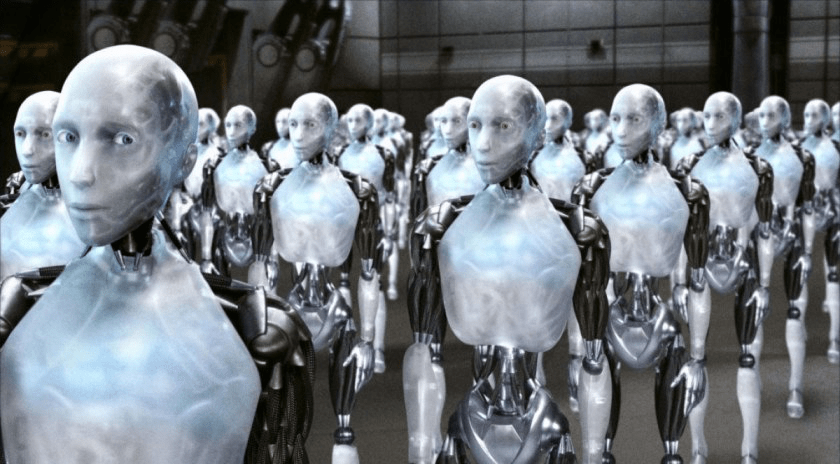
After a long, hard thought and mental discussion, I want my final project to be about artificial intelligence (AI) and the excessive use upon these devices. I am working around “When is enough, enough?” and also “How much should we rely on AI’s?”
According to my storyboard, I plan to begin with a split screen between modern use of electronics and what everyone believes is the worse case scenario in something like an AI invasion. I’ll continue to use different examples like R.U.R., Meet the Robinsons, iRobot, e.t.c. I will then follow those clips with interviews with people well aware electronics.
Cut together a couple of pros and con videos of Artificial Intelligence. For example:
Proceeding that I will continue that with some home-hitting facts, and finalizing the film by either proposing a question OR follow up with predictions of what could be. However, I might need to provide the history of AI, or more in-depth into what artificial intelligence actually is. Also, I would like to provide my audience on how developed our community is at this moment. Interview and/or list creditable
I also might include generational thoughts on the subject, because I know my grandfather’s generation probably has a completely different opinion on the subject then my generation.
Nevertheless, I’m still working on finding a credible person related to the subject to interview…
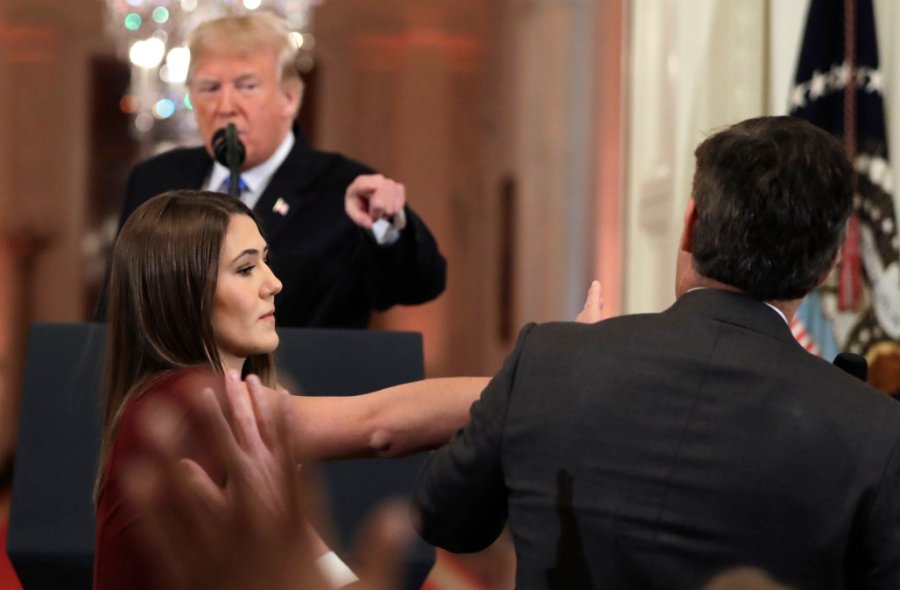
Back in the good ol days, journalist had to be aware of the entire community, vigalent to every possible news story, cautious not to be false while still being excitable enough to be interesting. Fast forward to the 21st century, and we have a wave of “Fake News”, but what made this giant leap and the emerging of news and entertainment?
The most drastic change in traditional reporting is easily due to the creation of the internet. Prior to the internet, journalist were the main recievers of news. However, following the internet’s existance, anyone can pull out a camera and report what news is around them. This caused journalists to tip the journalism’s equalibrium, and instead of focusing on reporting honest, factual stories, it’s more about timeliness and 
reporting the fastest. In the “We the Media” article, by Dan Glimor, he explains “the fundamental shift being that now the audience decided what is important and what will be trending rather than a media house. Bloggers and other participative journalism platforms have emerged as a source of competition to mainstream media by publishing information, reporting real time, sharing opinions and pushing it out to the whole online community with no involvement of any traditional media.”
According to the Huffington Post, as a result of the uprising use of ‘Citizen Media’ increasing, the following effects are intiated:
“1. Media is now much more democratised because it is open to many people.
2. A fairly fundamental change is that consumers are now producers and vice-verse.
3. Also, we now have a read-write Web that allows people to write easily on the Web.
4. Journalism has traditionally been a lecture–journalists tell you what the news is, you either buy it or you don’t. Now it’s moving into something like a conversation and the first rule of a conversation is to listen.
5. And journalists have not been listening, many times readers know more than journalists. This isn’t a bad thing, it is just an opportunity to do better journalism.
6. The democratisation of access to media  means that the audience now has many choices and most of them are free.
7. Media organisations are asking the public what they know about things and also about what they want reported in media.”
With the internet becoming an easily, free platform to acquire news, actual journalist, who find out the real truth about a story for a career, is unadequte enough because they charge money. If you had a choice between free news and news you would have to pay for, what would you choose? That’s the problem and the answer…
This problem of false reporting is caused by the lack of funding in local news journalist. If citizens paid for their news (specifically local news) more, there would be a decrease in false news, and an increase accuracy put into every story.
After a long, hard thought and mental discussion, I want my final project to be about artificial intelligence (AI) and the excessive use upon these devices. I am working around “When is enough, enough?” and also “How much should we rely on AI’s?”
According to my storyboard, I plan to begin with a split screen between modern use of electronics and what everyone believes is the worse case scenario in something like an AI invasion. I’ll continue to use different examples like R.U.R., Meet the Robinsons, iRobot, e.t.c. I will then follow those clips with interviews with people well aware electronics. Proceeding that I will continue that with some home-hitting facts, and finalizing the film by either proposing a question OR follow up with predictions of what could be…




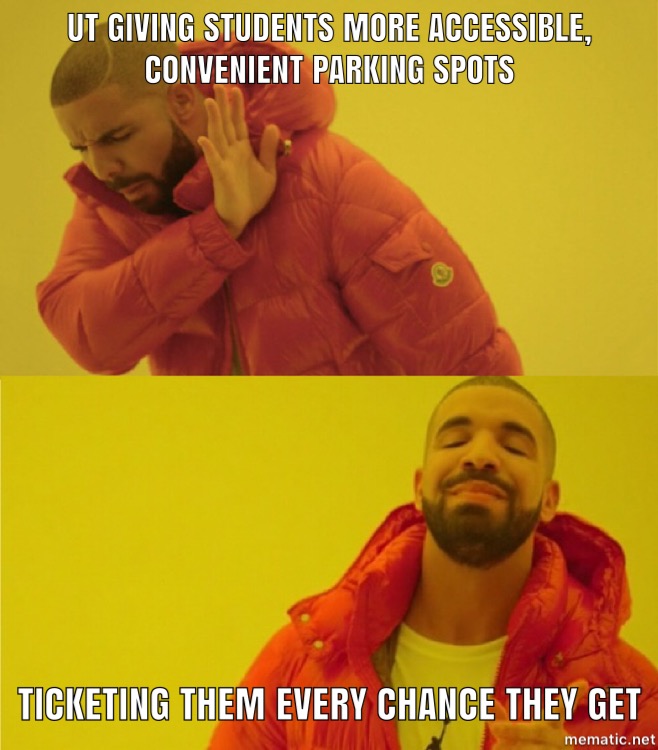
“This meme was very funny and very true,” Ryan Mixon, a student the University of Tampa says. ”
“This meme is 100% accurate.” Jeremy Thabes, a student at the University of Tampa.
After showing a few of my friends, roomates, professors, and even immediate family, I never seen 100% of results from an experiment before. Every single person I asked to give their opinion gave almost the same answer. To paraphrase their answers to an average, they said “this is so true”. A lot of students, parents, and staff try to fight the parking tickets, but it’s a rare occasion when they actually win the rebudel. The goal of this project was to address what everyone is thinking and position on this topic.
I had the pleasure of sitting down with electronical genius Clell Carnes, former salesman for multiple big brand electronic retail stores. He was sincere enough to share some knowledge about the two, and his personal winner.

Celeste Crickshank is an inspiring business owner and entrepreneur. Her goal is to make a difference not only within the community, but most the victims of sexual assault. I got the pleasure to interview her…

What is your company?
“My company name is called “Embolden”. It’s a clothing line campaign that raises awareness to people who have suffered from domestic violence.”
“I’ve learned the value of patience. Having a start up is the most challenging part. It takes a lotto grit, determination, discipline, and you always have to stay consistent.”
“I wanted to be an entrepreneur for my whole life. I never want to be in a position where someone else watches me over my work. I believe that there are a lot of current issues that have a big impact in modern day society. I believe that tweens, teens, young adults, and even some adults tend to have fixed mindsets. I think young business owners have the ability to give more people in our society to have a more positive mindset.”

“Ive known so many people that have been abused by domestic violence. I also have a lot of empathy towards people, and I’ve notice that a lot of people tend to put themselves down, talk negatively about themselves, and no motivation to do what they want. Their passions! Through noticing this cause and effect in people, it really inspired me to do something about it.”
“No. For the longest time Ive always wanted to be a singer or DJ. Ive always wanted to be involved in music. Music has always been there for me to heal. It is my therapy. I’ve always wanted to help people, and the only way i thought of having a positive impact on people was through music. Through meeting people from the past couple of years, I learned that social media is the easiest way to tune into people’’s emotions.”

“Since I’ve had a clothing line, I hope that feel comfortable, confident, and secure in my clothing. Not only that but I hope people are able to tune in more and be more interested in what Embolden is. Our mission is to ejacate people on all forms of domestic violence and how that has a negative effect on our society.”
“I have been blessed to be raised in a great home and environment, but I also had my fair share of experiences of abuse within my family. Ultimately, I want people to be inspired and act on their own tuition and act on their dreams.”
“Accepting the fact that you’re not going to always get what you want. It takes grit and determination. The thing to starting a company is, you’re the only one planning and making decisions, acting on the decisions that you make could be a
good thing or a really bad thing depending on the circumstances. Also, we live in a world that everyone follows ethical morals. So deciding who to bring in the company could also have a big impact on everything I’m doing for my company.”

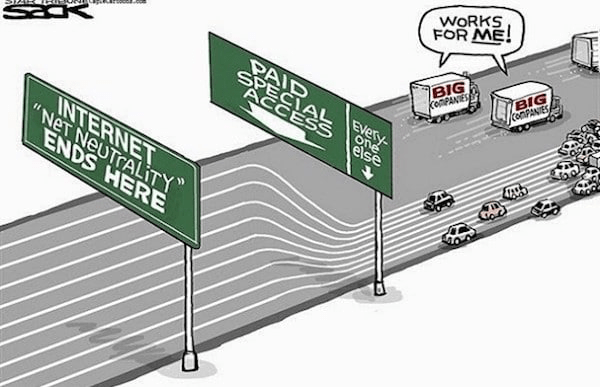
According to Medium.com is “a series of rules centered on the idea that Internet Service Providers must service customer requests in a way that is agnostic to data being provided. Net neutrality has a long history in American politics that predates The Internet by many years,” but how would this effect you and me?
It all started with the 32nd U.S. President, Frederick D. Roosevelt, and the passing of the Communications Act of 1934. When this law was passed, the FRC (Federal Radio Commission), with the Federal Communications Commission, or the FCC. The FCC is used to regulate upcoming technologies (during that era) which included: broadcasting television and telephony. This act gave the FCC the power to classify a communication organization as a “common carrier”.
New Deal politicians blamed the laissez-faire policies on the strong monopolies. As a result, they didn’t want this situation to repeat itself. By passing the Communications Act of 1934, power companies weren’t capable of monopolizing.
Fast forward to 1996, the Telecommunications Act of 1996 was passed the transmission of those services over the existing telephone network would remain as a common carrier. This makes perfect sense: websites aren’t transporting your 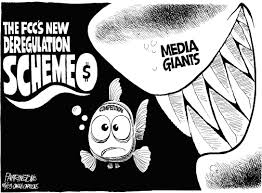 data anywhere — they receive your request and respond to it; the ISP transports those requests and responses. However, the 1996 act abstained from classifying the new cable broadband Internet Service Providers under Title II, leaving this new “high speed” Internet industry essentially unregulated. In addition to this lack of classification, the 1996 law sought to reduce regulatory barriers to entry in both telecom and broadband by softening the laws of the previous regime as set in the 1934 act.”
Tim Wu, a University of Virginia professor, argued that “the promotion of network neutrality is no different than the challenge of promoting fair evolutionary competition in any privately owned environment, whether a telephone network, operating system, or even a retail store. Government regulation in such contexts invariably tries to help ensure that the short-term interests of the owner do not prevent the best products or applications becoming available to end-users. The same interest animates the promotion of network neutrality: preserving a Darwinian competition among every conceivable use of the Internet so that the only the best survive.”
“What about the debate that constantly influx the news?”
Well, there are two sides with their own opinions. One side (that consists of commoners like you and me) will argue that net neutrality is what keeps the internet from becoming monopolized and keeps the relations between the consumers and businesses equal. On the other hand, “Many tech companies and internet activists feel differently. They say that internet service providers can throttle speeds, charge more for faster service or block websites and apps if not regulated more closely by government,” myajc.com says, “Republicans have largely sided with internet providers, while tech giants like Google and Facebook, civil liberties groups and Democrats have backed the Obama-era rules.”

In 2015, 49 Democrats and 3 Republicans from the Senate approved of Net Neutrality. However, with recent Presidential elections resolving with Trump victorious, Congress becomes prominently Republican; meaning that businesses can adjust to their standards (speeding or slowing internet speeds as they please).
Recently, the FCC Chairman, Ajit Pai, voted to ban Net Neutrality, and the internet, news, and social media had their opinions flooding. “Supporters of net neutrality say that it protected everyday Americans from having their internet slowed down or their favorite websites blocked by a greedy, evil internet service provider. Others have said net neutrality made sure free speech wasn’t stifled by ISPs. These claims are nothing more than myths,” FOX news claims, “Market forces already protected consumers, because if an ISP started deliberately slowing down people’s favorite websites and streaming services, or putting an end to free speech, consumers would simply switch to a different ISP.”
Many believe that Net Neutrality is what keeps the world grounded. By banning it, we’ll have to find out what happens next…
 Digitech